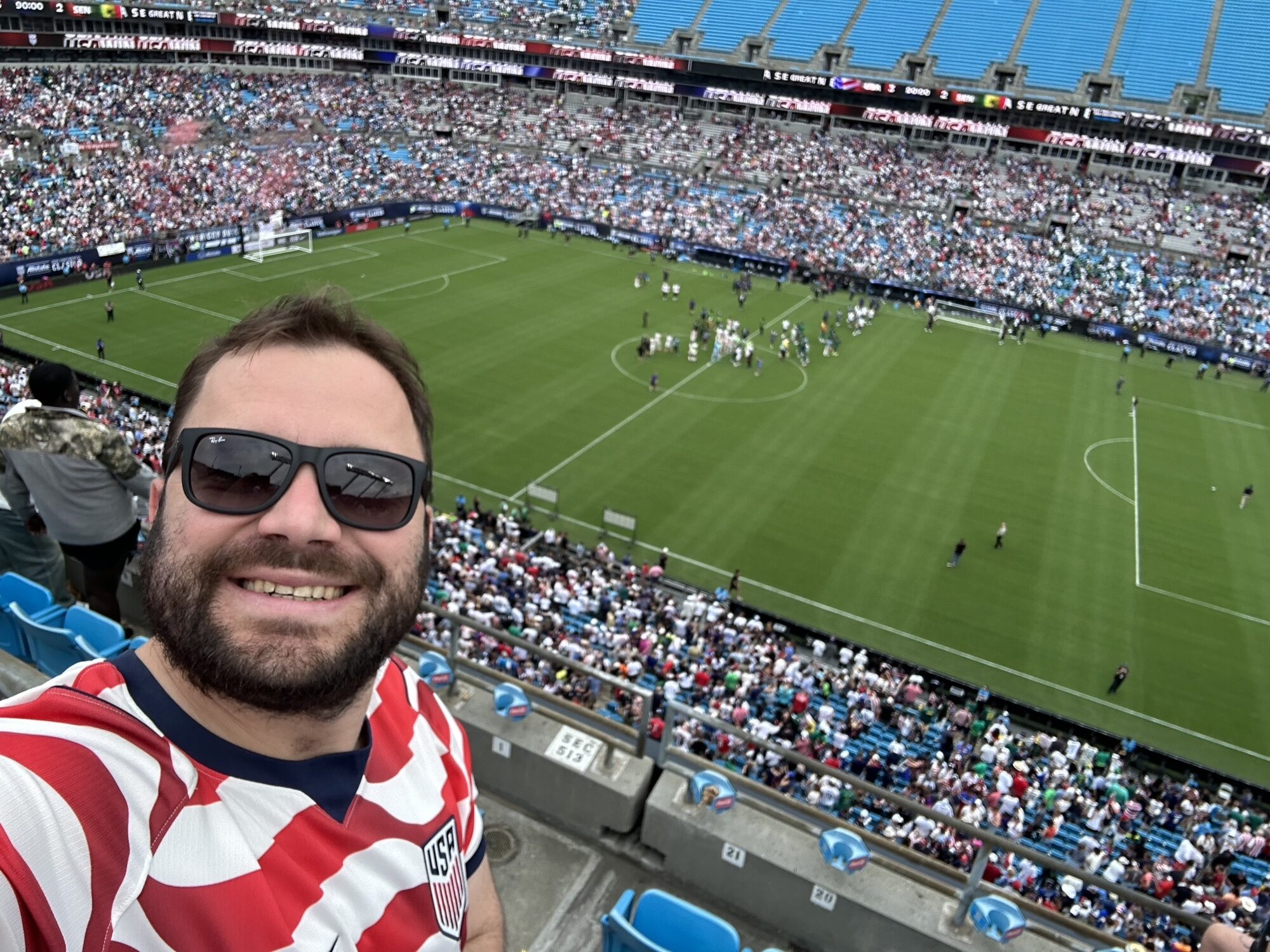
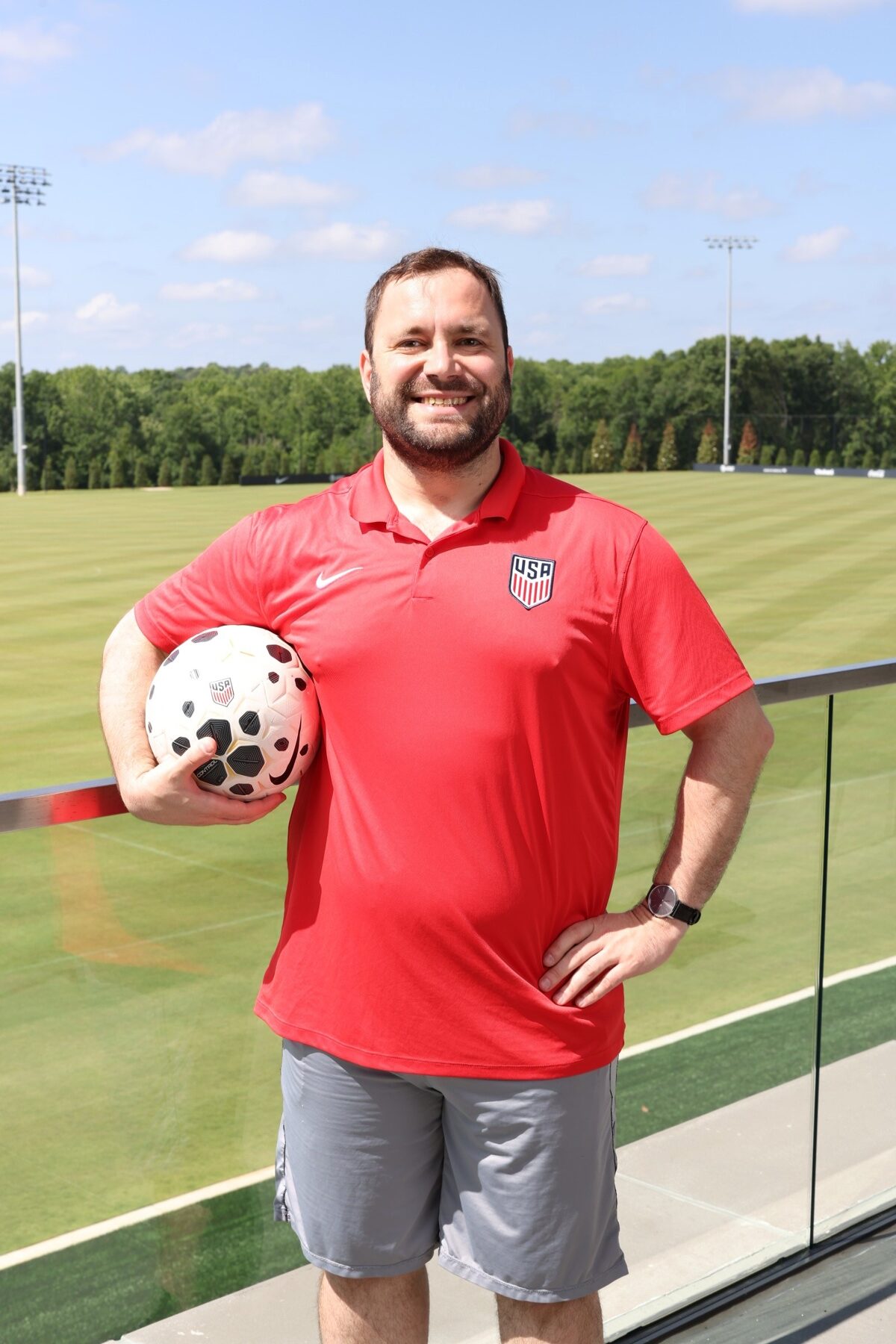
Andrew Ceacatura is a 2025 graduate of ACM’s Master of International Affairs (MAIR) program. Greg Grassi, ACM’s Director of Admissions, sat down with Ceacatura to chat about his role as the Senior Coordinator for Participation & Environments at U.S. Soccer, which he began after graduating from ACM. Ceacatura also writes a blog called “Explaining Offsides,” which examines the relationship between soccer and international politics.
Grassi: Congratulations on your position, which, as I understand, was a new position created before the 2026 World Cup. Can you share more about your responsibilities?
Ceacatura: Thanks. I am involved with executive coordination of logistics, and my team’s goal is to get more Americans playing and watching soccer. We are trying to make soccer safe, accessible, and fun. There is a big focus on coaching education and refereeing, too.
Grassi: What drew you to ACM and the MAIR program initially?
Ceacatura: I had studied in France previously, in Nantes, and absolutely fell in love with France, the language, and the people. I also worked at the National Democratic Institute with a focus on West Africa and democracy, but I was ready to see what was next for me in the international relations space and had always wanted to get my master’s. I was lucky that an ACM MAIR grad recommended the program to me.
Grassi: Was it hard to leave your job and that security?
Ceacatura: It was a difficult choice, but I needed a place that focused on professional development and would make me more marketable—that is what ACM did very well, in that they have all these incredible opportunities where you engage with diplomats and others in the IR field. I wanted a place that could make me useful, and where I would be able to jump in if offered a new opportunity. In hindsight, the timing couldn’t have been better since the funding for the work I was doing was eviscerated almost immediately after I started at ACM.
Grassi: Can you tell me more about your experience with faculty at ACM?
Ceacatura: The wandering spirit — meaning the wanting to discover — was really reflected in the faculty. ACM is a small institution, and one of the positives of that is that I wasn’t just another student, another number. They were invested in me, and from admissions to the faculty, there was an extra level of attention and determination they showed me; I could tell that everyone wanted me to succeed.
Grassi: What are some other highlights that stand out?
Ceacatura:
– Dr. Mose’s class on International Law and Conflict – the emphasis that, in all international relations and development work, you are working with people at the end of the day really was incredible.
– Our field studies trip to Brussels, where we visited the European Parliament, NATO, and had these incredible discussions on the future of the European Union and the new world order.
– Dissonance and the Mediterranean was an incredible course that taught me what it means to be a modern advocate, especially in the context of the Mediterranean.
– Outside the classroom, I also got to DJ a lot, as that is something I have done for 15 years, and I met lots of people who really care about music and really supported me.
Grassi: I wanted to ask about your thesis and blog and if that had an effect on you getting your current job?
Ceacatura: I have been obsessed with soccer my whole life and the role of sport around the world, and I wanted to write about the politics of soccer and even wanted to write my BA thesis on this topic but did not get the chance. I got really into Côte d’Ivoire and Didier Drogba and the incredible role the team played in bringing people together — people who had previously been at war with each other when the team qualified for the World Cup. I have never worked harder on a project than this thesis. It helped me realize that there was something there with soccer and international development. When I got back to the U.S., I launched my blog “Explaining Offsides”. I think soccer around the world often has a way of telling our national stories better than anything else.
Grassi: With everything going on in the world right now, some students are perhaps a little reluctant to invest in their education or maybe are not sure what job will be left for those in politics and IR. What would you say to those thinking about going back to school?
Ceacatura: The space of IR is never going to be the same, and this may be sad, but there is a great opportunity to rebuild it and maybe account for ways to make things more resilient to threats to democracy. I hope that we are going to see support for new types of foreign aid and that this will be discussed more. Now there is an opportunity to get the education and background to help rebuild things in the way we want to see. I am a good example of learning to adapt, or to “be water” as we say at U.S. Soccer: to be flexible and fluid and learn to problem-solve. My advice is to reframe the current situation as an opportunity. This job that I got is a direct result of the work I did at ACM.