
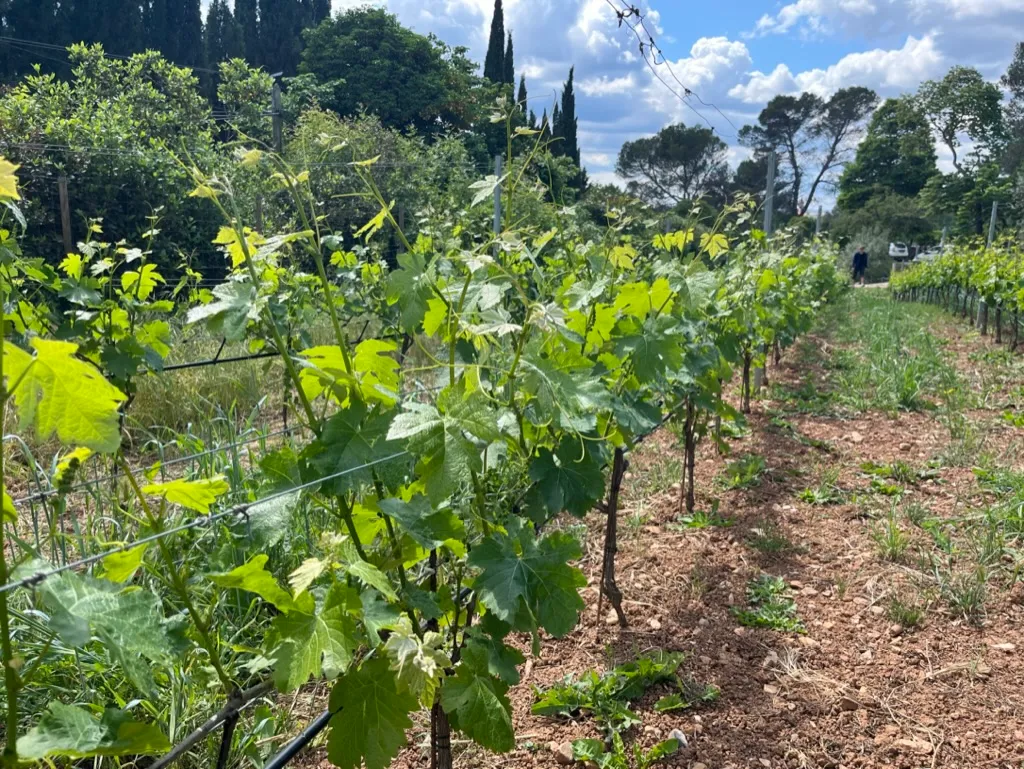
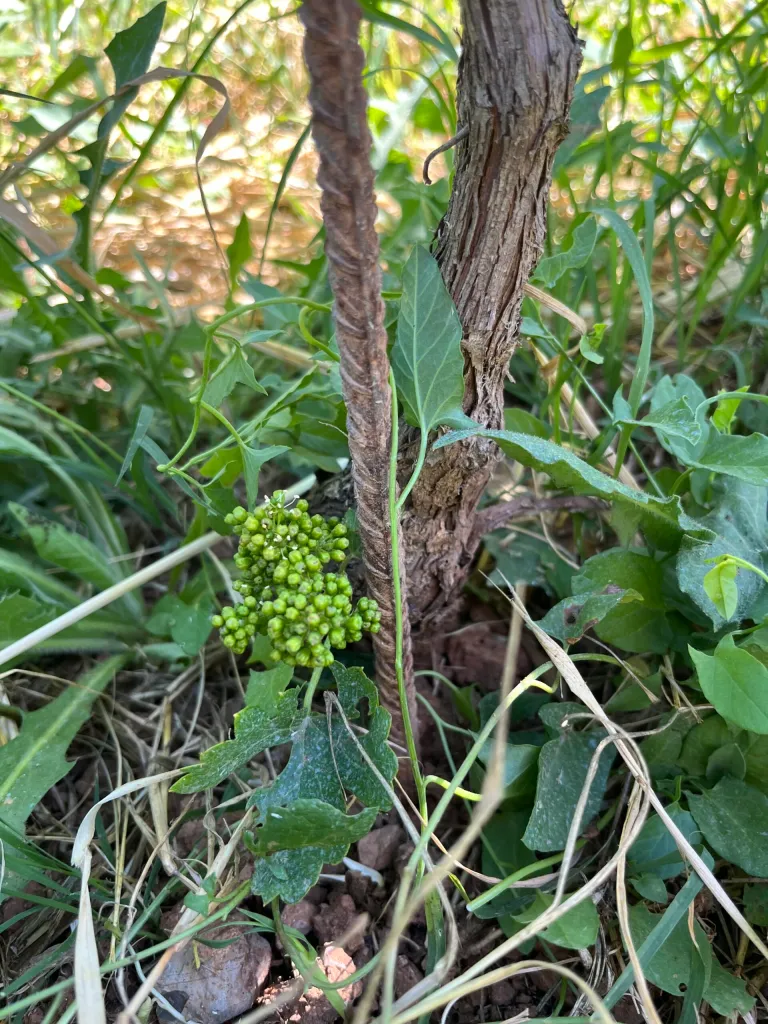
 Like a phoenix rising from its ashes, Vitis vinifera comes back after a selective 90% removal of the previous season’s vine growth. Winter pruning shows the vine where the viticulturist wants it to grow during the following season’s cycle. Each cut determines where both canopy and clusters will be located after the development of the plant. After an intense period of growth, flowering and fruit set take place during the month of May. As summer begins, these hermaphroditic plants fertilize their own flowers to provoke their transformation into small green fruits, which grow and ripen into the berries which the vintner will eventually use to create wine.
A couple small words to describe an immensely intricate process, with infinite variable microcosms which come together to form the basis behind the harmonious work of viticulteur and vigneron
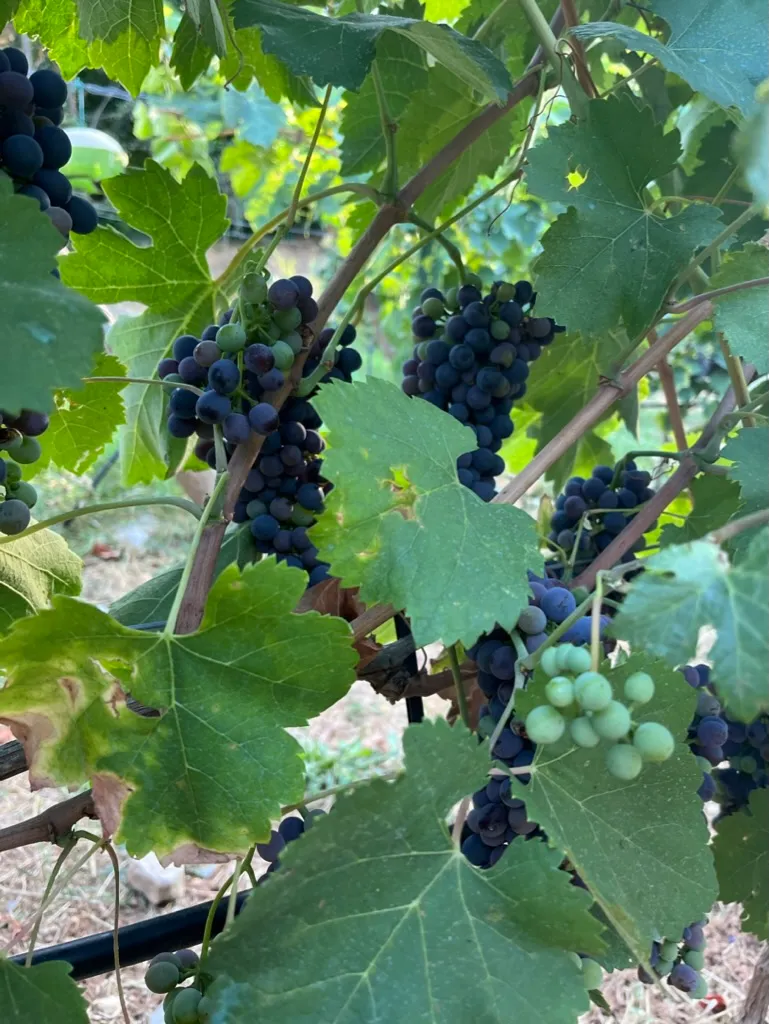
However, summer is not simply a time to wait for véraison – a loan word from the French, meaning literally “change in color of the grape berries.” The three varieties in our vineyard, Grenache, Syrah, and Cinsault, all count themselves as red – or black – grapes. Meaning this small, hard opaquely green berry will first turn lighter and translucent before developing pinkish pigments that eventually deepen into a red and finally a blueish black. Conditions must be favorable for this hallowed process to occur, but this is why we include human intervention as an integral part of that definitionally elusive terroir. Using the experience of past years, both mistakes and successes, preparations can be made to create the best environment possible for the winemaking vines.
Generational knowledge passed down over 8 millennia enlightens the educated vigneron. After using all the tools at their disposal to prepare for this period: natural fertilizers (manure), cover crops, weeding, and shoot thinning; the work now focuses solely on the vines themselves. Canopy management is the order of the day – leaf removal, green pruning, and green harvesting.
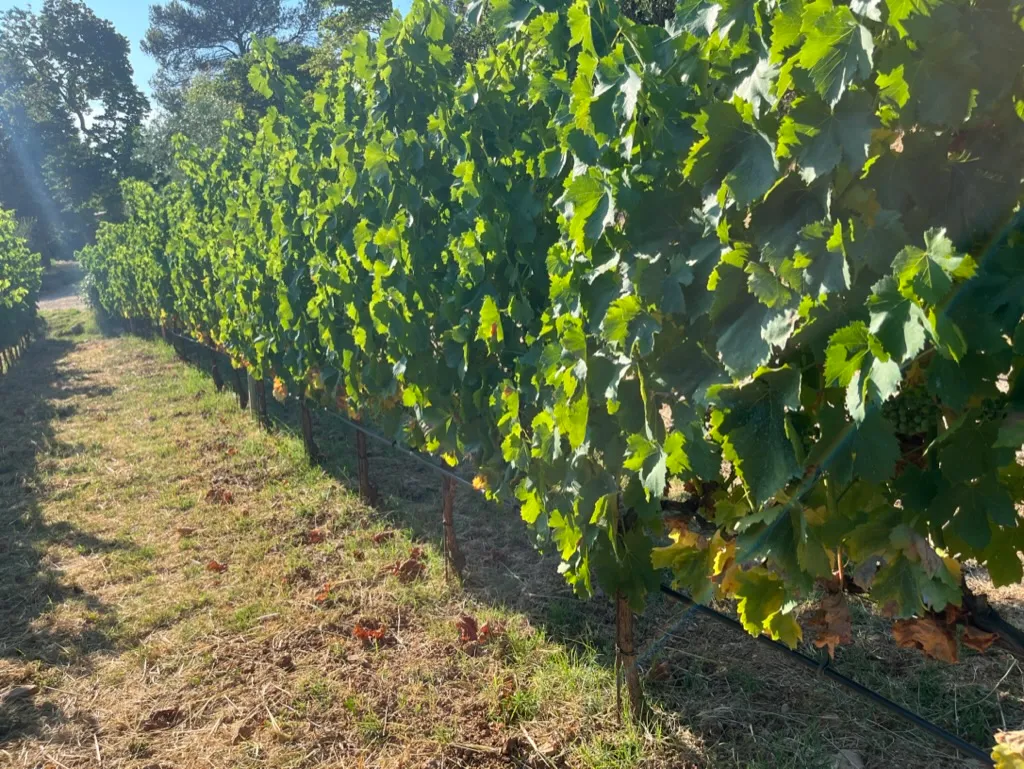
Leaves serve a dual purpose in their photosynthesizing ability, which creates the sugar that feeds the vine and is stored in the grapes; as well as its dappled shading ability, which keeps the clusters from becoming burnt while also allowing the sun to peak through and generate ripening. Too many leaves can be a problem, so the mindful viticulteur walks their vines and carefully selects leaves to remove, dropping them to the ground as natural compost, also allowing the wind to better aerate the grapes and limit the development of diseases.
Green pruning has the dual objective of maintaining accessibility of the vineyard and directing the vines to concentrate their energy. A wildly overgrown vineyard is simply hard to walk through, pruning the ends of shoots makes this more manageable. At this point in the lifecycle, the winemaker prefers the vine’s energy to be concentrated on growing fertile clusters, and pruning the ends of their branches sends a feedback signal to the vine to pause shoot growth.
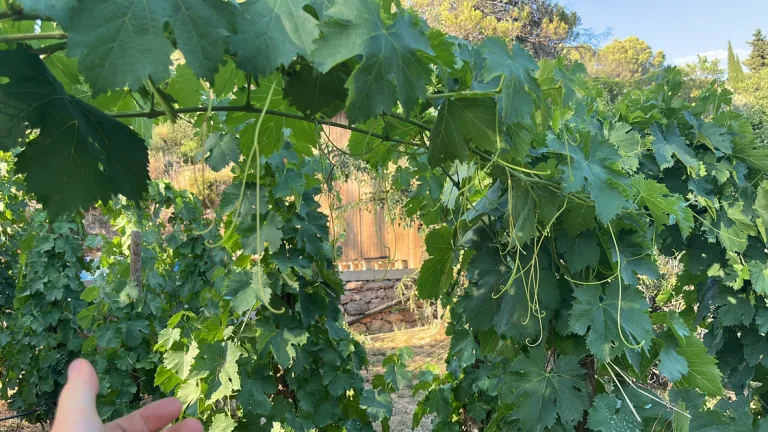 Green harvesting is also known as dropping bunches. When a vine’s capacity to ripen a certain number of clusters has been overestimated, this can lead to immaturity and even a complete lack of ripening. Harvesting the greenest and least promising berries allows the vine to concentrate on the other more promising bunches. This ensures consistency between plants, prevents individuals from bending or breaking under the strain of being overweighed, and avoids spoiling the wine with underripe vegetal or acrid flavors. It is also a necessary part of yield management in order to respect rules of specific appellations.
Lignifying or augusting, which, as its latter name suggests, occurs in the ninth month of the Gregorian calendar, is simultaneous with the ripening period of the grapes. Their acidity drops, while sugar concentration increases and the aroma-producing chemicals are developed. However, we see the green shoots and branches turn into a darker hue that can range from pinkish- to orangish-brown depending on species. The vines also noticeably thicken, in order to support the weight of the clusters. Another coinciding occurrence is the dropping of leaves, which the plant naturally does as newer, younger leaves are better placed for photosynthesis. This naturally aids in the aeration and sun exposure of the clusters, aided by the vigilant vigneron.
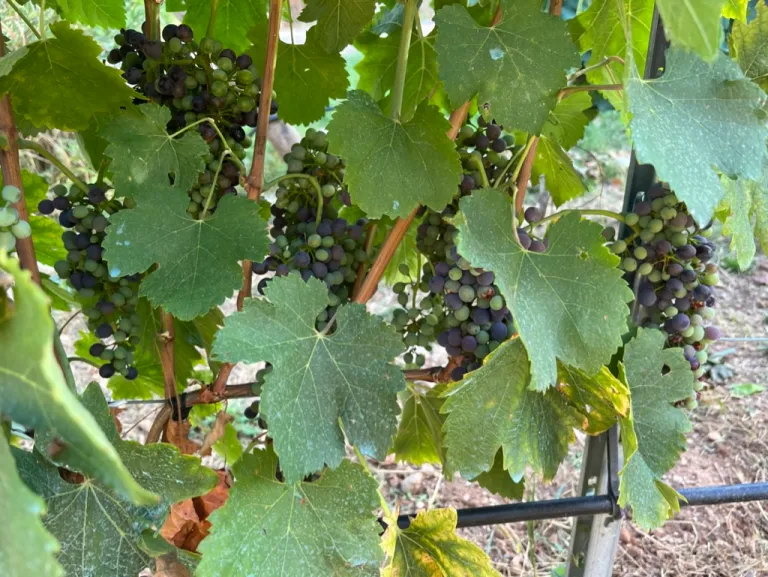 As summer draws to a close, the four seasons’ work has all been leading to a single objective: the harvest of grapes to create the year’s wine. Specific harvest dates vary based on region, though in Provence, we can start as early as late August. Grapes destined to make rosé wines are often taken in this period – the goal being to preserve the crisp acidity in the grapes. Mid-to-late September is usually preferred for grapes which will make red or white wines; a wait time that allows sugar to concentrate further and lead to a higher level of protective ethanol for longevity.
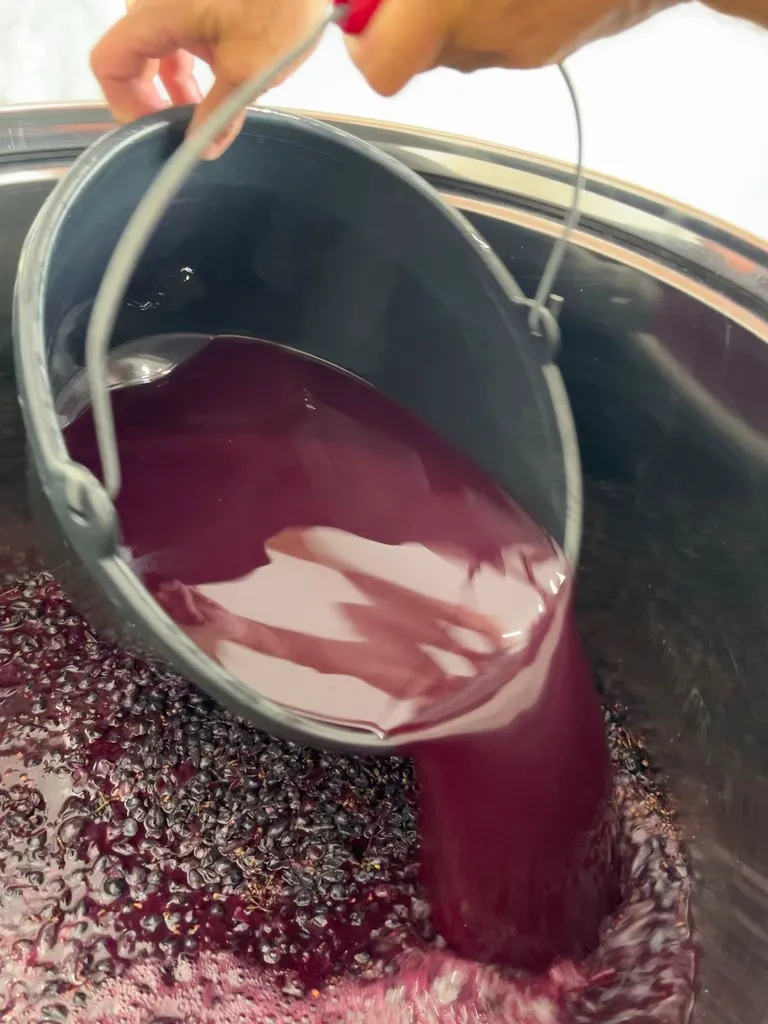
Summer’s hard work leads into a short reprieve in the vineyard, before the late fall and early winter work begins. But to every yin there exists a yang, and as work slows down between the vines, it ramps up between the tanks. The harvested grapes and ensuing must (moût) must be carefully monitored to ensure the proper fermentation into wine – another simple way to refer to an incredibly intensive process. The winery is now the center of a winemaker’s life.
– C. P. deLeón-Franzen